
If your customers can’t explain your AI, it’s not working
)
Recent reporting in Retail Gazette on CI&T’s Retail Tech Reality Check put hard numbers behind what many store teams have sensed for months: most shoppers in the UK and Ireland encounter AI somewhere in their journey, yet around two-thirds can’t recall a single moment that genuinely stood out, even as a clear majority say they want retailers to use AI to improve the experience. This piece builds on that reporting to offer an indie-focused playbook: how to turn “invisible AI” into moments your customers and store teams can feel, describe and actually use.
 The problem with invisible AI
Much of retail’s AI lives behind the curtain—recommendations, forecasting, fraud and pricing—great for operations, but rarely a story a shopper tells later. Add to that the lingering worries highlighted in the CI&T research around privacy, bias and data security, and you get the tension independents feel daily: customers want help, but they don’t want to feel watched, profiled or nudged. If AI stays both hidden and unexplained, that unease never really goes away.
Three “felt value” briefs for independents
A more useful question than “Where can we plug in AI?” is “Where will a customer genuinely feel the benefit—and explain it in one sentence?” These briefs are designed to take straight into planning sessions or onto the show floor when you’re talking to exhibitors and tech partners.
1. Help me find the right thing fasterThis is where AI can turn from buzzword to clear service.
• On your website, think beyond a basic search bar. Could someone type “colourful vase under £40 for a friend who loves maximalism” and receive a tight, on-brand edit, not hundreds of SKUs?
• For interiors and furniture, visual search is gaining traction. Imagine a buyer at JFS snapping a sofa and instantly seeing matching accent pieces from your range, or a customer using an Instagram photo to locate similar items in your store.
• In-store, guided-sell tools on tablets can cut through overwhelm with “three questions, then three perfect options.”
Try this at shows: Ask vendors to demo “why these results?” explanations in plain language, not relevance scores.
Measure: Time-to-right-product and assisted-session NPS.
2. Turn stock issues into service moments
AI can’t magic infinite stock, but it can turn a roadblock into a surprisingly helpful pivot.
• If the hero product on your Home & Gift stand has just sold through, could your system surface a pre-curated list of alternates by price point, colour and lead time so staff don’t scramble?
• For customers, an out-of-stock message can become a junction: suggest genuinely similar items, check nearby branches or offer clear pre-order and lead-time options instead of a flat wall of “unavailable”.
• For made-to-order and furniture, more reliable delivery predictions—ones you’re ready to stand behind—matter more than shaving a day off an overly optimistic ETA.
On-stand use: Prompt exhibitors to show “nearest-fit alternates” with live lead times when a line is sold through.
Measure: Substitution acceptance rate and saved-sale rate.
3. Put trust into the interface, not just the policyThe CI&T numbers underline how data misuse and breaches shift shopper behaviour, especially in tighter economic conditions. For independents, trust is often the sharpest differentiator.
• If pricing is personalised or time-sensitive, label it as a benefit: “show-special price for orders placed at the fair” or “loyalty price applied” is far more reassuring than unexplained fluctuations.
• For recommendations, a simple line—“chosen based on what you browsed today”—puts logic where customers can see it.
• Offer toggles for certain AI-driven features, with clear explanations of what changes once switched on or off.
Equip teams with a 15-second script: “Here’s why you’re seeing this, and how to switch it off.”
Measure: Opt-in rates for personalisation and a drop in “why was I shown this?” complaints.
Using shows and social as your AI sandbox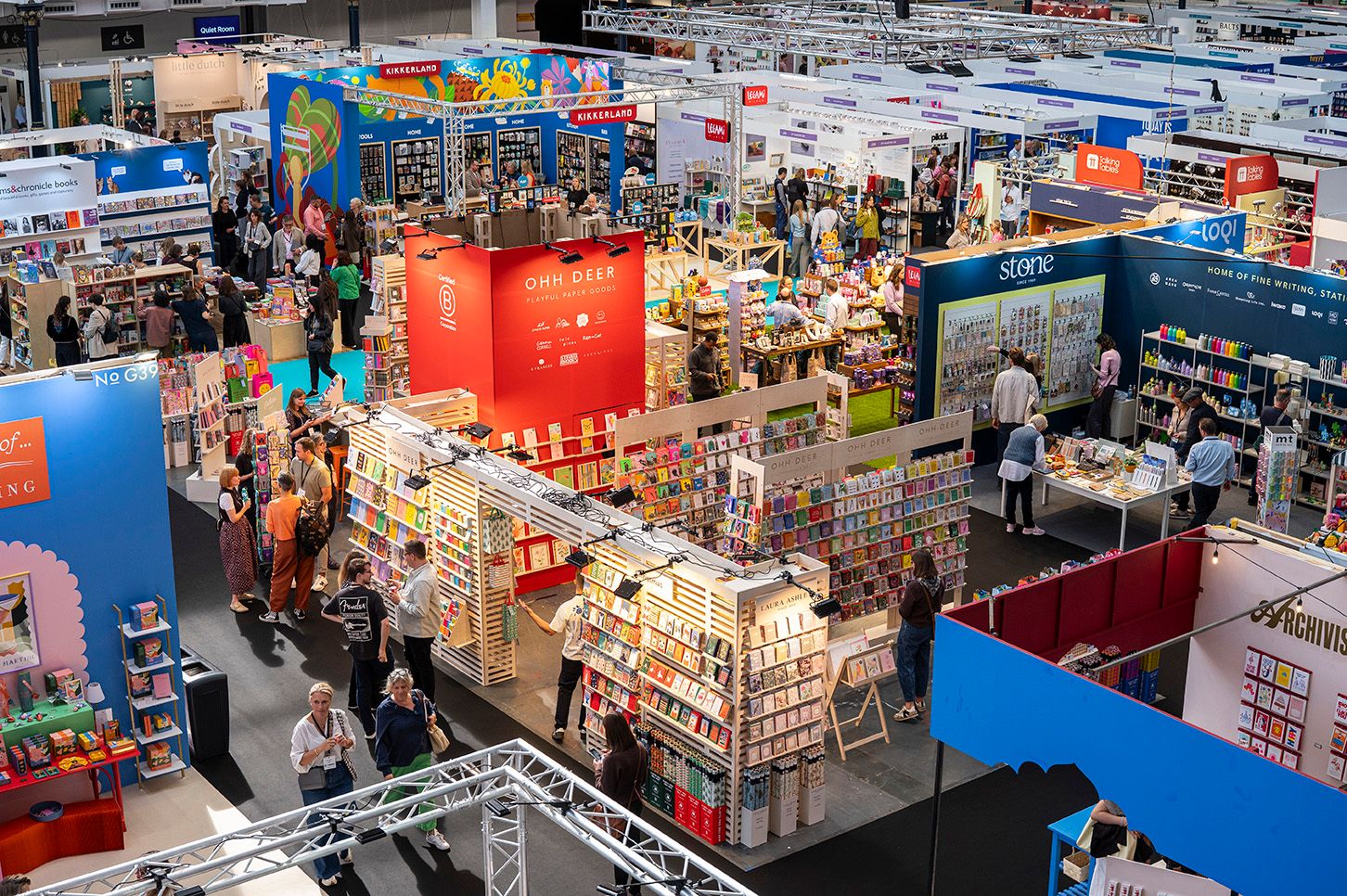
One of the most striking insights in CI&T’s research is how mainstream social shopping has become. Discovery, research and purchase now blend into a single continuous journey, which makes social the perfect testbed.
• Try Instagram or TikTok Lives where a colleague uses an AI-assisted product finder behind the scenes. What viewers experience is simply friction-free discovery: “ask us anything and we’ll surface the perfect product”.
• Set up smarter back-in-stock flows that suggest alternatives in comments or DMs instead of ending at “out of stock”.
• Explore show-specific tools. A Top Drawer exhibitor, for instance, could give buyers a QR code that opens a “build my edit” flow, using AI to pull together the first draft of an assortment buyers can refine with the rep.
Top Drawer/January Furniture Show : Place a QR on POS that opens an AI gift-finder flow and train staff to co-pilot it with customers during busy bursts.
Buyer tip: When a supplier claims “AI”, ask for a 60-second role-play that starts with a real shopper question and ends with a clear, on-brand recommendation.
A practical checklist for your next planning session
• List every point where AI already touches your business: search, recommendations, email journeys, social flows, stock and pricing tools, fraud checks, any generative content experiments.
• For each, ask: “Could a typical customer or colleague explain why this helps?” If the answer is no, decide whether it’s a back-office tool (fine) or a missed chance for visible value.
• Choose three friction points, one online, one in-store/showroom, one across social or email,and brief partners: “Design one visible, named AI assist that reduces friction here.”
• Define success beyond conversion: time-to-right-product, store-team feedback and whether customers recall and describe the feature a week later.
Add one metric to your dashboards this quarter: AI recall, can customers or colleagues describe a specific AI feature and why it helped?
If a typical customer can’t explain your AI in one sentence, it isn’t ready for prime time. Make it visible, useful and easy to talk about.